
Viennese medicine: from the Narrenturm to Steinhof
A round tower for the mentally ill, wax models from Florence and an Art Nouveau church without sharp edges: places where you can see the history of Viennese medicine.
Van Swieten and the First Viennese School of Medicine
For a long time medicine at universities was pure theory. In Vienna this changed in the 18th century: in 1745 Maria Theresa brought the Dutch physician Gerard van Swieten to court. He reformed medical studies, introduced teaching at the bedside and reorganised public health. He is also known for his report on alleged "vampires" in Moravia, which he explained by natural causes.
The General Hospital and the Narrenturm
Under Joseph II the General Hospital in Alsergrund opened in 1784 – a large complex for all the sick, regardless of rank or religion. In the same year the Narrenturm next to it took in its first patients: a round, five-storey building for the mentally ill, which the Viennese mockingly called "Emperor Joseph's Gugelhupf". Today it houses the pathological-anatomical collection, part of the Natural History Museum since 2012. The old hospital grounds have been a university campus since 1998.
The Josephinum
In 1785 Joseph II founded a medical-surgical academy to train army doctors – at the time surgery was still often performed by barber-surgeons. Its building, the Josephinum, now displays the medical history collections of the Medical University of Vienna, including the famous anatomical wax models made in Florence in the 18th century.
The Second Viennese School of Medicine
In the 19th century Vienna became a centre of medicine:
- Carl von Rokitansky made pathological anatomy the basis of diagnosis,
- Joseph Škoda developed physical examination (percussion, auscultation),
- Ferdinand von Hebra founded scientific dermatology,
- Ignaz Semmelweis recognised the cause of puerperal fever and reduced mortality through hand disinfection,
- Theodor Billroth performed the first successful gastric resection in 1881.
Karl Landsteiner discovered the blood groups in Vienna in 1901 and received the Nobel Prize for it in 1930.
Steinhof
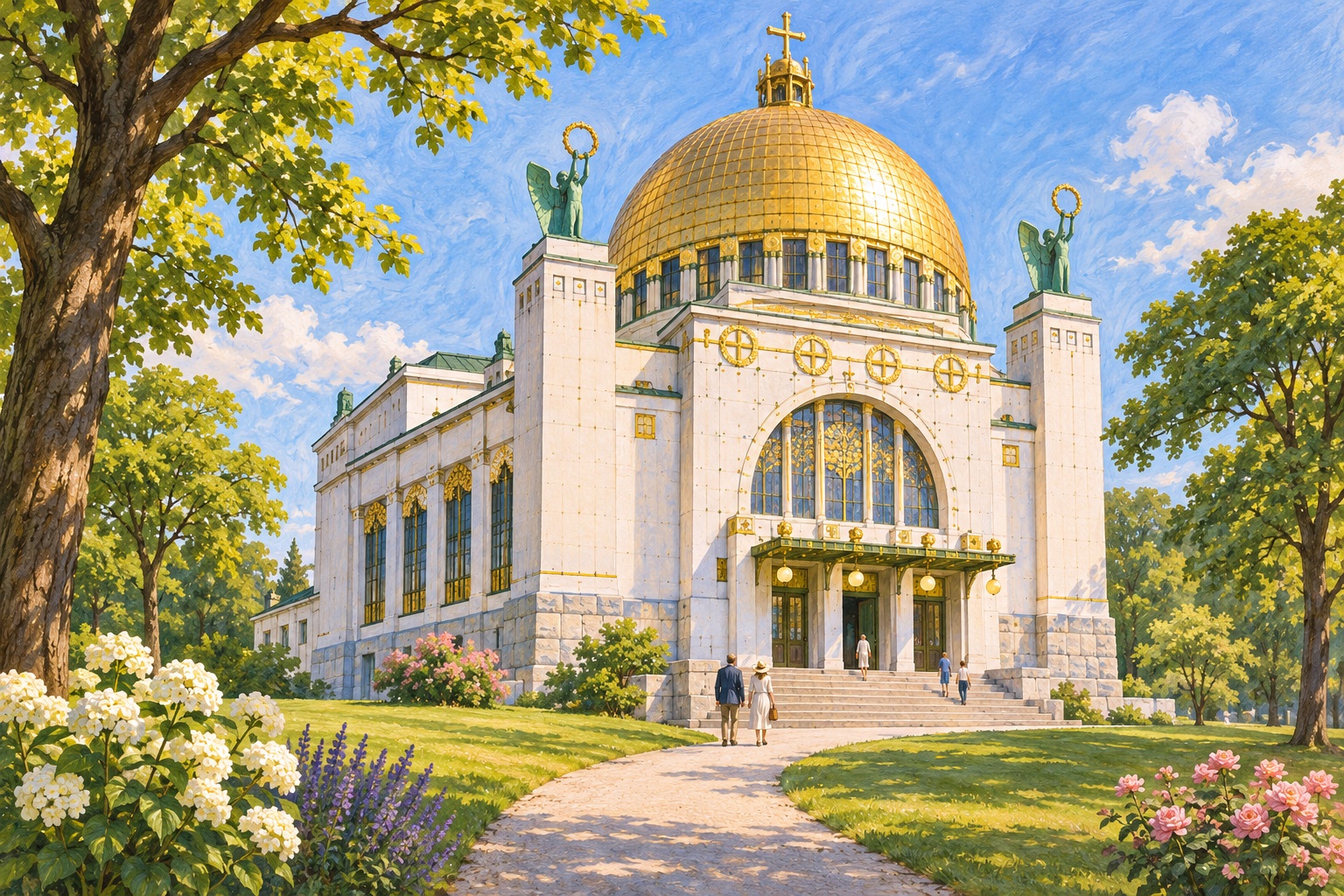
In 1907 the Am Steinhof psychiatric hospital opened, with pavilions set in greenery and Otto Wagner's Church am Steinhof, decorated by Koloman Moser – a masterpiece of Art Nouveau, designed with its congregation in mind: washable surfaces, no sharp edges, good sight lines for the nursing staff. The site's history also includes the Nazi era: at the "Am Spiegelgrund" institution children and adults were murdered; a memorial commemorates them. Please check the church's visiting times before you go.
This article is based on "От цикуты до томографа" ("From hemlock to the CT scanner") by Olga Chupova in Code 43 magazine, spring/summer 2015, and has been newly edited for code43.at.