
The Viennese waltz: from ban to craze
Today no ball is complete without it – yet just over two hundred years ago the waltz was considered indecent and bad for your health. How a suburban dance conquered the world.
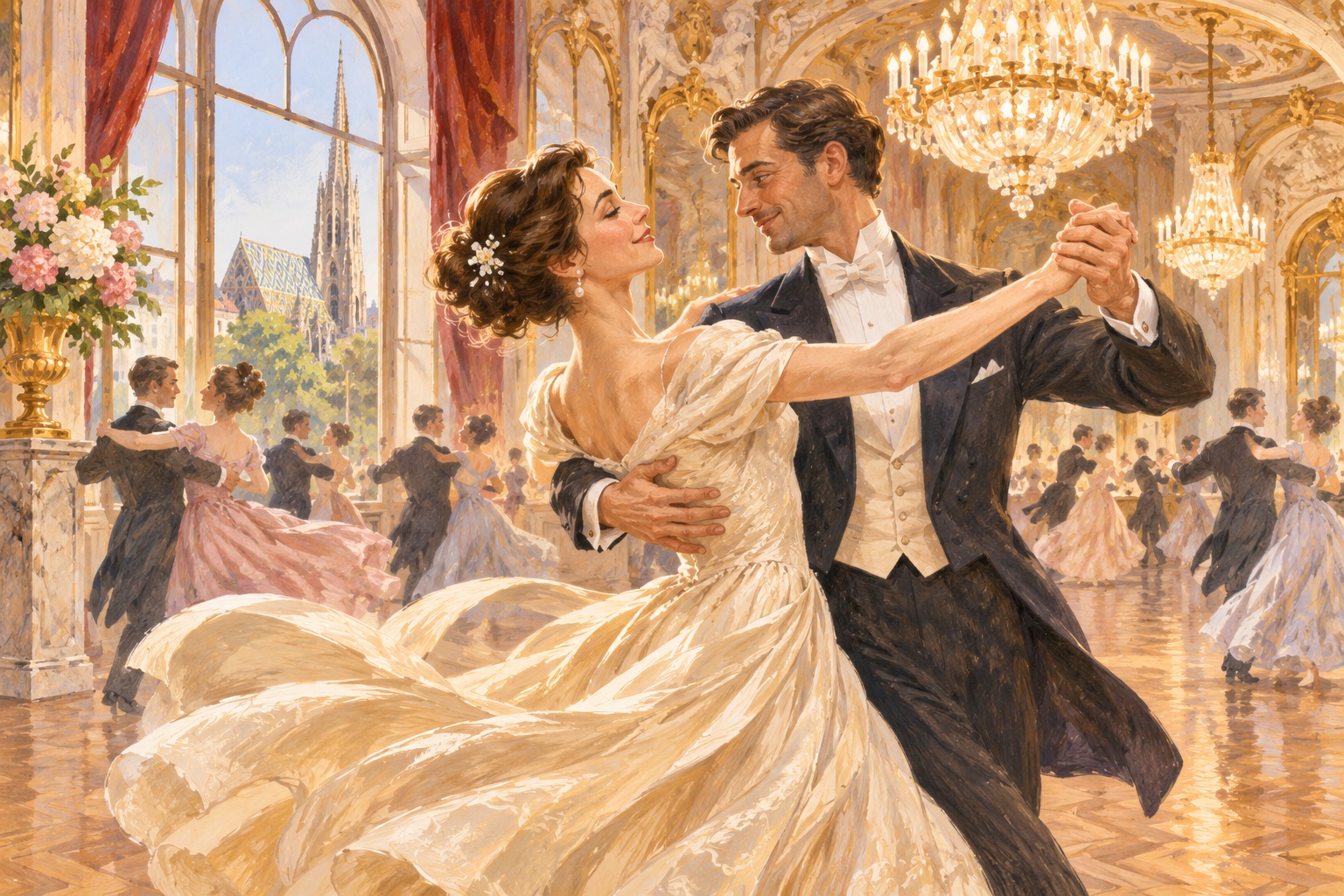
Where it all began
Musicologists still argue about who played the first waltz. One appealing version leads to the stage: in the opera "Una cosa rara" by Vicente Martín y Soler, premiered in Vienna in 1786, the main characters whirl in a waltz-like dance in the finale – a dance that until then had been the pastime of the suburbs and ordinary people.
Its roots really do lie in folk music: in the Ländler and other turning dances in three-four time. At the end of the 18th century small groups – often two violins, guitar and bass – played such tunes in the inns of Vienna's suburbs. Michael Pamer came from this world, and Joseph Lanner and Johann Strauss I began their careers in his band.
An "indecent" dance
For the Church and the authorities the waltz was a nuisance for a long time: too close, too fast, too wild. Newspapers and travel accounts of the period speak of moral decline and danger to health. It prevailed anyway – partly because it was easier to learn than the stiff minuet, and partly because it suited a society that was becoming freer after the French Revolution.
The Congress of Vienna in 1814/15 gave it a big boost: delegates waltzed at the balls and carried the dance back to the capitals of Europe.
Lanner, Strauss and sons
Lanner and Strauss the elder made the waltz shorter, faster and fit for the concert hall. Neither lived to fifty; both now have honorary graves at Vienna's Central Cemetery. From the 1840s Johann Strauss II – against his father's wishes – took over, together with his brothers Josef and Eduard.
Many anecdotes are told about the "Waltz King" – for instance, that he never danced the waltz himself. The story of his most famous work, on the other hand, is documented: "The Blue Danube" was written for the Vienna Men's Choral Society and premiered in February 1867 in the Dianabad – at first as a choral waltz. Worldwide success came with the orchestral version, not least at the Paris World Exhibition the same year. Today the Blue Danube is regarded as Austria's unofficial anthem.
The waltz today
In Vienna it is still good form to be able to waltz. The ball season peaks during Fasching (carnival), and many professions and associations hold their own balls. If you don't know the steps, Vienna's dance schools offer courses – often including short beginners' lessons before a ball.
This article is based on "Венский вальс: от запрета до восторга" ("The Viennese waltz: from ban to delight") by Ekaterina Kozerchuk-Pisnyachevskaya in Code 43 magazine, winter 2013/2014, and has been newly edited for code43.at.