
The Prater and the Republic of Kugelmugel
Imperial hunting ground, popular amusement park, World Exhibition – and a perfectly round republic: the history of the Prater is as colourful as its funfair.
From hunting ground to park for all
The area in the Danube wetlands is first documented in 1162. In the 16th century Emperor Maximilian II, a passionate hunter, made the Prater his hunting ground. In 1766 Joseph II opened it to the public – soon coffee makers, innkeepers and showmen were allowed to settle there.
Today the Prater is much more than the amusement park: the Hauptallee, about 4.5 kilometres long and lined with chestnut trees, leading to the Lusthaus, meadows and riverside woods, the trade fair grounds, sports venues and the Krieau trotting track.
The Wurstelprater
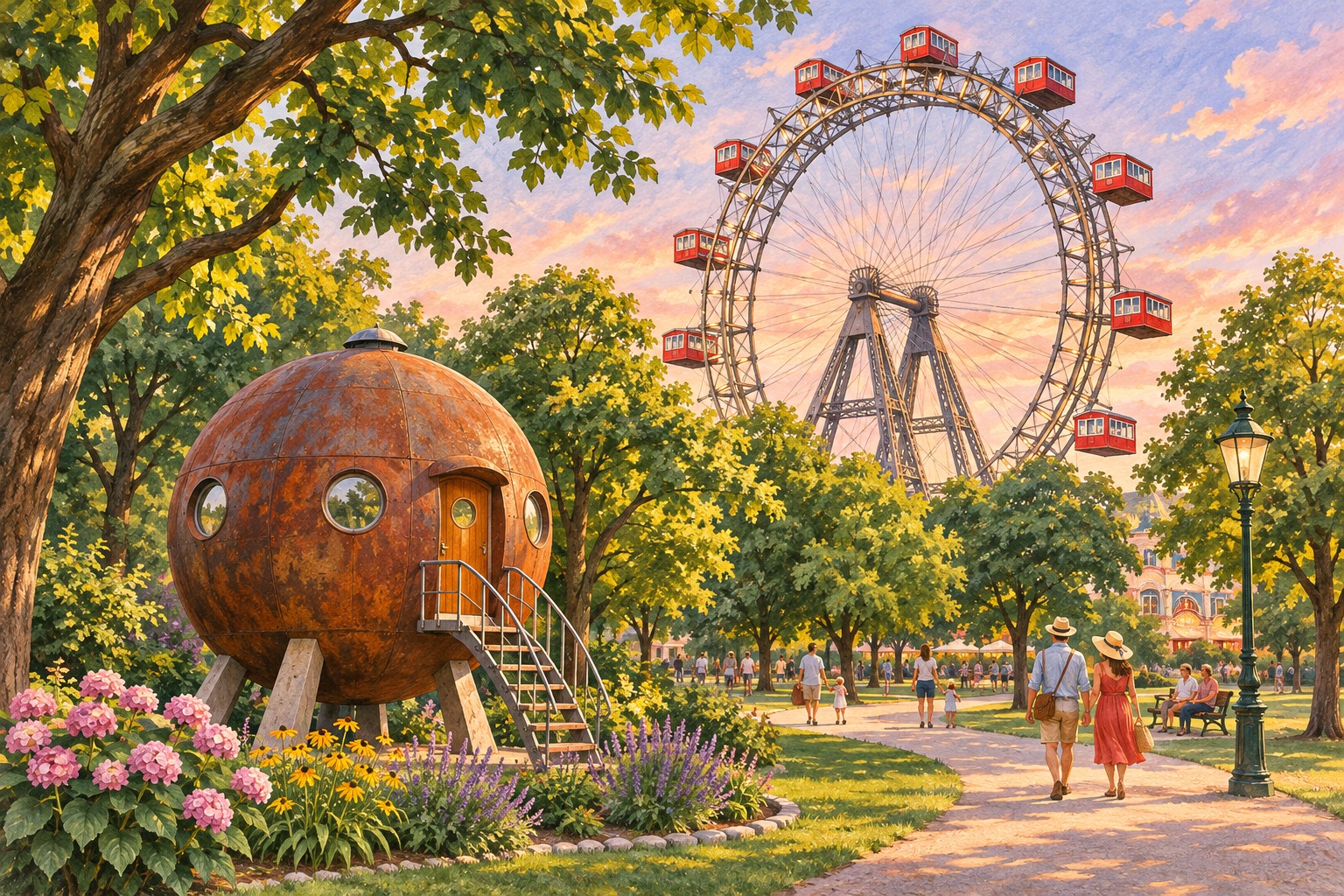
The amusement park's nickname goes back to Hanswurst, the comic figure of puppet and folk theatre. Over the centuries carousels, wax works, ghost trains and later electric rides were added. Its landmark has stood since 1897: the Giant Ferris Wheel (Riesenrad).
For the 1873 World Exhibition the Rotunda was built in the Prater; its dome was considered the largest in the world at the time. It burned down in 1937.
A republic in the Prater
Next to the Wurstelprater stands a spherical house eight metres across: the Republic of Kugelmugel. The artist Edwin Lipburger had built the sphere in 1971 in Katzelsdorf, Lower Austria, without planning permission. In his dispute with the authorities he proclaimed his own republic in 1976, issued stamps – and in 1979 was sentenced to ten weeks in prison for usurping official authority. In 1982 the City of Vienna brought the sphere to the Prater. Of course nobody recognises the republic; it can only be viewed from outside.
This article is based on an article about the Prater by Olga Chupova in Code 43 magazine, summer 2014, and has been newly edited for code43.at.