
The Natural History Museum Vienna: dinosaurs, meteorites and the Venus of Willendorf
On the Ring two identical palaces face each other. One holds art, the other nature – and the bigger surprise is here.
Twins on Maria-Theresien-Platz
The Natural History Museum and the Kunsthistorisches Museum are part of the planned Imperial Forum on the Ringstrasse. The mirror-image buildings were designed by Gottfried Semper and Carl von Hasenauer; construction began in 1871. The Natural History Museum opened on 10 August 1889 – two years before its twin. You can tell them apart by their decoration: the sun god Helios stands on the dome of the Natural History Museum, the goddess Athena opposite.
A museum of a museum
With around 30 million objects, it is one of the world's major natural history museums. Only a small part is on display; most of the collection serves research carried out in the museum itself. Many halls still have the display cases and furnishings of the opening years – which makes the building a museum of itself as well.
Not to be missed
- The Venus of Willendorf, a limestone figure about 30,000 years old, found in the Wachau in 1908.
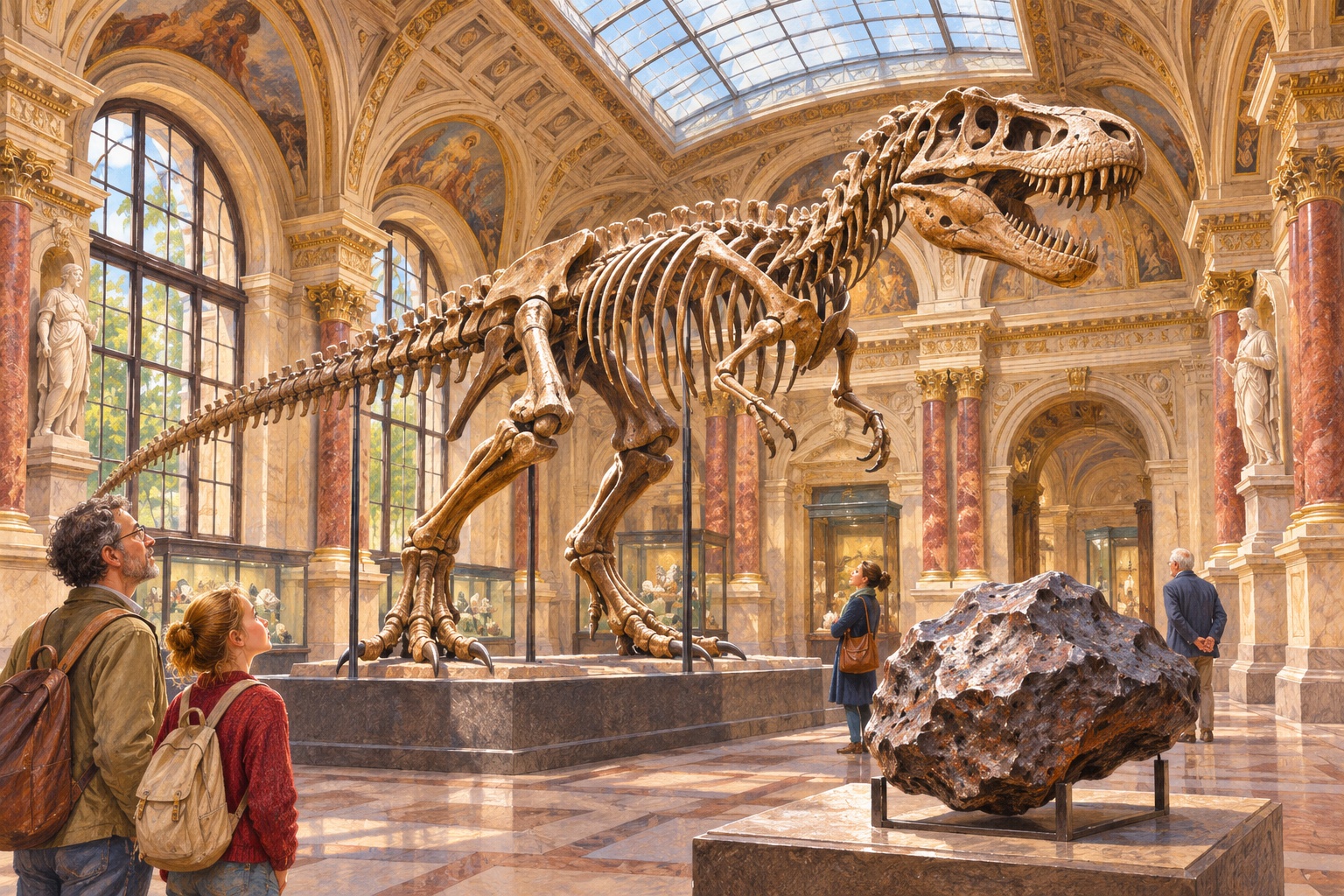
- The dinosaur hall with skeletons and a life-size moving model.
- The meteorite collection, whose beginnings go back to the 18th century – one of the oldest and largest of its kind.
- The mineral collection with gemstones from imperial ownership.
- The digital planetarium with full-dome projection.
Since 2012 the pathological-anatomical collection in the Narrenturm in Alsergrund has also belonged to the Natural History Museum.
Please check opening hours, admission and current exhibitions on the museum's website before your visit.
This article is based on "О динозаврах, метеоритах и редких землях" ("On dinosaurs, meteorites and rare earths") in Code 43 magazine, winter 2014/2015, and has been newly edited for code43.at.